Showing posts with label california native bulbs. Show all posts

Monday, October 4, 2010

Obsessive Squirrel Mode Begins Tomorrow

Brodaiea californica

So the fact that I'm expecting a box today that contains 39 pounds of bulbs isn't excessive or anything, right?  I mean...  right?!?

(Most of them aren't for me, I swear!)  

Friday, August 27, 2010

Next, Please!

 Brodeaia found at Castle Rock (Mt. Diablo)

I wouldn't be a fanatical gardener if I didn't almost totally neglect the fabulous late show of Zauschnerias and Eriogonums currently dazzling the garden to ponder the age old conundrum, "What's next?"  The answer?  Why, bulbs of course!  Bulb purchasing always whips me up into a frenzy while turning the pages of my catalog or comparing bloom times in online forums. 

 'Jenny' Daffodil

They're so beautiful, the photos seem unreal- the abundance of flowers and bright colors.  It reminds me of the touch-ups and Photoshopping that takes place on models in magazines.  Can that really happen in my garden?!  Well, yes!  Allow me to offer a few tips:

Brodeaia ida-maia

I'm usually swayed by the pricing, so I tend to under-order.  Doesn't 100 bulbs sound like a lot?  Sometimes it's actually not enough!  However, I do know other folks who over-order, so my best advice would be to ask another gardener (one who will have no role in helping you plant the bulbs) if it sounds like too little or too much if you're unsure.  Close spacing can really make an impact, but not so close that the bulbs touch each other- it can lead to rot.

'Thalia' Daffodil after a rain shower

Mix in large and small bulbs together, but keep an eye out for bloom times and plant height. California native bulbs tend to bloom later, so a carpet of low-growing annuals such as Meadowfoam or Baby Blue eyes can help bridge the time between when the Manzanitas bloom and the Salvias bloom.

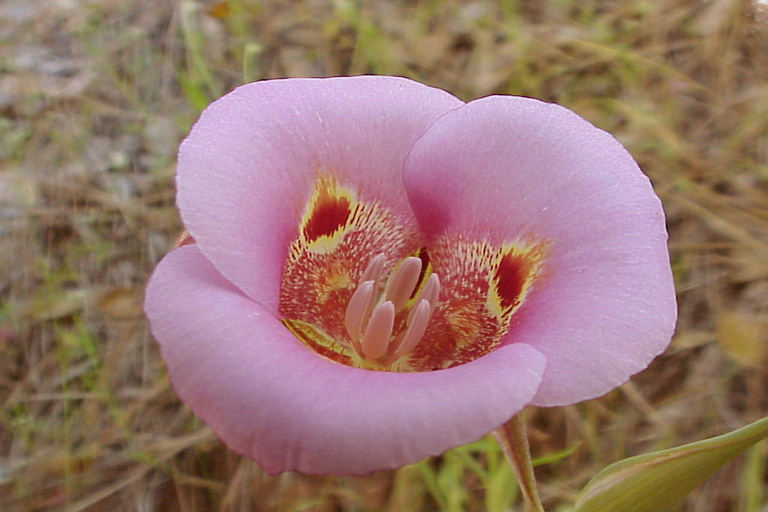
Calochortus superbus

If you're worried that some of the Tulips or Daffodils will not be California dreamin', catalogs usually mention if the varieties work well in the South (ie, grow in warmer climates).  Here's a few links to some online shops:

John Scheepers has selection and pretty good pricing.  They carry many natives under the "Best of the Rest" category if you're not finicky about hybrids or getting California natives from Connecticut by way of Holland.

I've never purchased from them, but Far West Bulb Farm carries the more unusual native varieties (plus they're sourced locally and ethically).

I also googled my way to Telos Rare Bulbs, who sells native, S. African and S. American varieties.  They have a blog, too to help facilitate my obsession!

I've never had luck with Tulips around here, so I haven't grown any in quite some time.  Anyone have advice to share?

Wednesday, May 26, 2010

Plant of the Week: Firecracker Flower


Pop!  Boom!  Oooooooohhh!  That pretty much describes Brodiaea coccinea (or Dichelostemma ida-maia), a California native bulb.    When planted in the Fall, this scarlet beauty will explode with flowers by Spring.  It's native to the North Coast and prefers part shade/redwood type environments, although mine are hanging out in my South-facing Oakland garden with no signs of distress.  Apparently, it was once considered a delicacy among Native Americans (although please don't try it at home until you've researched it...)

It looks like the blossom has petticoats!

Sun:  Sun (near coast) to part shade
Soil:  well-drained to light clay (heavy clay can rot bulbs)
Plant:  Unfortunately, no instant gratification for you!  Nab some bulbs in the Fall for a show next Spring
Buy it:  Scheeper's, Far West Bulb Farm, or Garden Natives might have it by next year, too.
Good for:  a pop of red in Spring, pairing with gray-foliage or blue Fescues, honestly this one can be incorporated in any style of garden so just try it!

Even the upright dried flowers look interesting!  Can't wait to see how it sets seed.

Thursday, April 15, 2010

Presenting: Mariposa Lily in Four Acts


I'm trying to embrace my impatience with the reluctant Mariposa Lily, instead focusing on the ever-changing story unfolding in my garden.  I'm beginning to learn that the other parts of the story besides the climax can be important, too as this Calochortus slowly unfurls her party dress in the sunshine.  She's striking quite the vogue-style pose in the photo above!

The drama builds...


An unexpected sub-plot emerges!


The tension rises and the suspense continues...

Wednesday, April 7, 2010

Plant of the Week: Mariposa Lily


I'm getting tempted to gently pull apart the bud of this lovely Calochortus superbus just to see inside as my patience is that thin.  Ok, I won't, but the suspense is terrible!  It is with that anticipation that I preemptively name the Mariposa Lily "Plant of the Week."

A native bulb, Mariposa Lily emerges in the Spring, with lackluster foliage and a knock-out of a flower.  Very Impressionist, I think!   This is one of the natives that has found an international following.  I obtained these bulbs from Scheepers, in Connecticut, of all places!

Photo found on Calphotos, © 2002 George W. Hartwell

Sun:  Full sun to part shade
Soil:  well drained with no summer watering
Plant:  Stick the bulbs in the ground in Fall, but if there's greenery (a 4" or gallon container), try to plant it before it blooms
Buy it:  Ok, next year I'm totally getting my bulbs from these guys, Far West Bulb Farm.  They've got some fantastic varieties!  If you didn't get a head start, Annie's might have some at the nursery.
Good for:  Springtime showstopper, filling in blank spaces between new plantings, containers.  I can't figure out if this flower supports wildlife.  Mariposa means butterfly in Spanish, but is it because its petals resemble a butterfly's wings or because the butterflies enjoy its company?  Anyone like to jump in here?